Cashli: Cash Advance & Rewards
- 4.1
- Rating
- 100.00K
- Installs
- Free
- Price

 Analysis by App-foxy
When an unexpected expense lands between paydays, the hardest part is often not the amount itself but the timing. That is the situation I kept in mind while trying Cashli: Cash Advance & Rewards, a free finance app from Cashli Funds. Its central promise is simple: help eligible users access a small cash advance when they need one, with rewards included as part of the wider experience. I found that focus more useful than treating it like a full banking replacement.
The app is aimed at people looking for short-term breathing room rather than a long-term money-management system. That distinction matters. Cashli is not the kind of tool I would choose to organize every account, build a detailed budget, or replace a conventional bank app. Its appeal is narrower and more immediate: it puts a possible cash advance in front of you without asking you to navigate a traditional lending website first.
The key question is not whether Cashli can solve every financial problem, but whether its short-term approach fits the particular gap you are trying to cover. In my experience, that makes the app potentially useful for a small, time-sensitive bill, while also demanding careful attention before accepting any offer or relying on it repeatedly.
You May Also Like

 Blood Strike: 2.5 Anniversary
Blood Strike’s Loadouts Turn Every Drop Into a Tactical Gamble
A close look at Blood Strike’s custom loadouts: how fast access to signature weapons reshapes its battle royale rhythm, rewards preparation, and narrows the gap between fights.

 Pandora - Music & Podcasts
Pandora’s Music Is Easy to Start, but Harder to Recover
Pandora’s strength is its low-effort path from a seed to a station. Its weak spot is how much confidence it asks you to place in connection, setup, and quiet recovery.

 8 Ball Pool
 Is Built on Rivalries, Rematches, and Routine
A close look at the rivalries, rematches, shared routines, and unanswered safety questions that turn a quick pool match into a persistent mobile community.

 Samsung Music
’s Quiet Strength Is Playing What You Already Own
Its reach comes less from spectacle than from dependable access to a personal library. That simplicity is both the app’s strongest retention engine and its ceiling.

 AccuWeather: Weather Radar
AccuWeather Review: A Quick, Clear Forecast for Everyday Decisions
For everyday plans, the best forecast is the one you can understand quickly. AccuWeather makes rain timing, radar, and local conditions easy to act on, with a few trade-offs.

 Hill Climb Racing
Why Hill Climb Racing Still Turns Crashes Into One More Run
A tiny car, a bumpy hill and one more upgrade: Hill Climb Racing keeps resurfacing because its simple chaos makes every near-miss feel personal.
More From Our News Desk



Cashli’s cash-advance focus in everyday use
I’d use this section to frame Cashli as a focused option for a short-lived cash gap, not a general-purpose money app. The practical question is how that promise holds up when a decision depends on a working connection, so I’d begin with the moments when the app needs to communicate and what I would do if that process stalls.
A focused tool rather than a complete financial hub
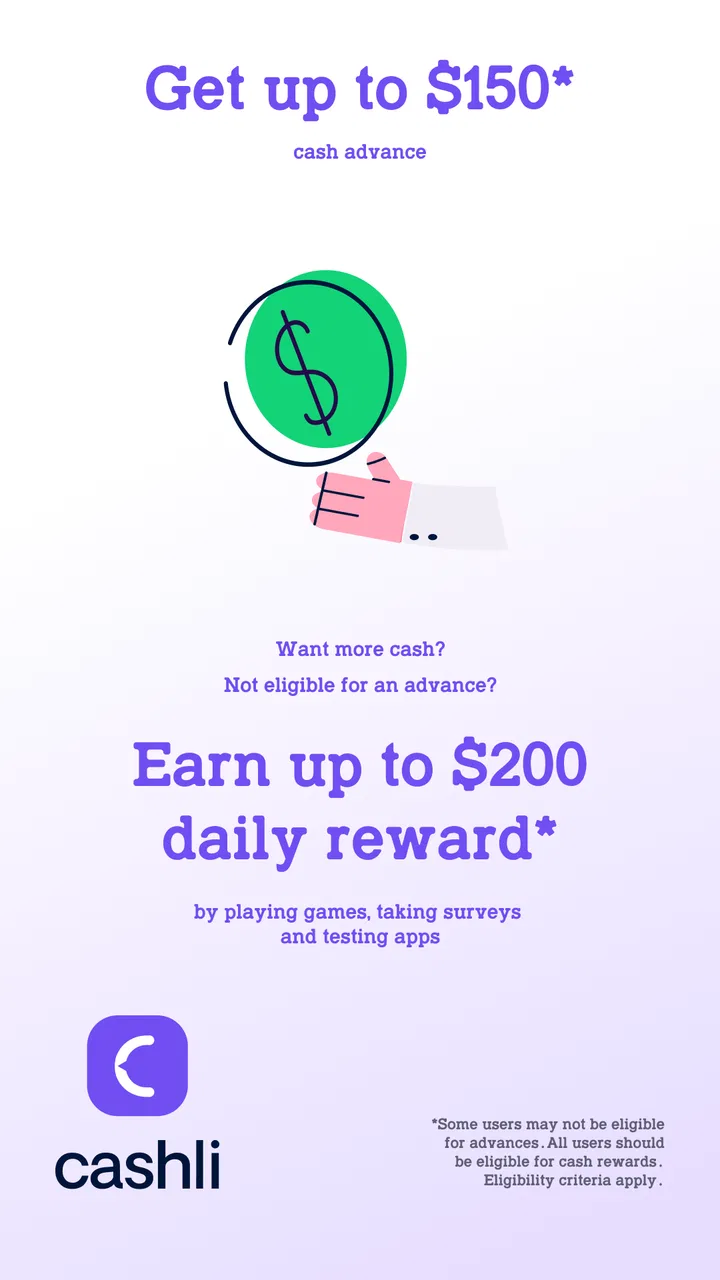
The most important capability here is the possibility of getting up to 150 bucks now. That ceiling immediately tells me how to think about the app. It is designed around modest emergencies, not large purchases, debt consolidation, or a replacement for regular income. A user who needs to bridge a small gap may find that focus reassuring because the app does not need to become a complicated financial dashboard first.
I also appreciate that the rewards angle gives the product a second reason to open it. Still, I would treat rewards as an extra, not as the reason to borrow. A reward can make an app feel more engaging, but it should never persuade me to take an advance I would otherwise avoid. The sensible order is to decide whether the advance is genuinely needed, understand the repayment implications shown in the app, and only then consider any additional benefits.
Cashli Funds keeps the experience under one recognizable product rather than sending users between a separate cash-advance service and a separate loyalty program. That can reduce friction for someone who wants a quick starting point. At the same time, a compact app can leave less room for the detailed education and planning tools found in a bank, credit-union app, or dedicated budgeting service.
What the app is trying to solve
I see the strongest use case as a temporary mismatch between income and an ordinary expense. Imagine noticing that a utility payment, transport cost, or necessary household purchase is due before your next paycheck. If the amount is small enough and you already know how you will restore the balance, Cashli’s advance-centered design may be more practical than applying for a conventional personal loan.
That convenience should not be confused with free money. A cash advance changes the timing of your money; it does not remove the expense. The next payday may feel tighter because the amount has already been used. I would therefore use the app only after writing down the upcoming income and fixed bills. That thirty-second check is more valuable than chasing a reward or accepting an advance simply because the button is available.
For someone who regularly reaches the end of the month with no buffer, the app may provide temporary relief but not a durable solution. Repeated advances can turn a one-time timing problem into a cycle. In that situation, a budgeting app, an employer-based early-pay option, or a conversation with a bank may be a better long-term direction, even if those alternatives feel less immediate.
Getting started without treating approval as guaranteed income
The app is free to install, which lowers the barrier to exploring it. Its content rating is Everyone, and it runs on Android starting with version 8.0, so it is accessible to a broad range of compatible devices. I would still separate technical accessibility from financial suitability. Being able to open the app does not mean every user will receive the same offer or should accept one.
My preferred first session would be deliberately cautious. I would install it, read each screen instead of tapping through automatically, check what information is requested, and examine the full terms attached to any advance before continuing. I would also confirm the repayment date against my own calendar. If the date collides with rent, groceries, or another essential bill, the advance may create more pressure than it removes.
One practical habit is to take a note of the amount requested and the amount expected back into your available balance. That makes it easier to judge the real effect on the next pay cycle. I would not rely on memory, especially when an app presents the experience in a quick, reward-oriented format. A short written record turns a tempting instant decision into a normal financial decision.
How it feels compared with usual alternatives
A traditional bank app is usually better for viewing balances, moving money, paying established bills, and understanding a broader financial picture. Cashli’s narrower purpose can be quicker to understand when the problem is a small cash gap, but it will not replace those everyday banking functions. If I need a complete record of spending, I would open my bank or budgeting app instead.
A credit card may offer more flexibility for a purchase, but it can also encourage carrying a balance and paying interest over time. Cashli’s appeal is that it is framed around an advance rather than an open-ended spending line. That does not automatically make it cheaper or safer; the actual terms matter. I would compare the total repayment and timing, not just the speed of access.
Employer-linked early-pay services can be a better fit for workers whose wages are already connected to such a program, because the advance may be tied directly to earned income. A conventional small loan may offer clearer documentation and a longer repayment structure, although it can take more effort. Cashli sits in the convenience-first part of this spectrum, which is useful only when the convenience does not hide a cost or create a repayment problem.
A realistic scenario where the app makes sense
Suppose I am several days from payday and my phone screen breaks, leaving me unable to work reliably or handle essential calls. I have a confirmed paycheck coming, the repair is within the app’s stated maximum, and I have already separated rent and food money. In that narrow situation, checking Cashli could be reasonable. The advance might help me handle the immediate problem without opening a larger credit account.
I would still compare the repair cost with the amount I would need to repay and ask whether a cheaper temporary option exists, such as delaying a nonessential purchase or using an existing emergency fund. If I proceed, I would use only the amount needed rather than automatically selecting the maximum. The most useful feature in this scenario is not the headline limit; it is the ability to address a defined, short-lived gap without turning it into a larger borrowing decision.
By contrast, if I needed money for several weeks of groceries, an overdue rent balance, or multiple unrelated bills, I would not regard Cashli as an adequate solution. The limited advance could cover one symptom while leaving the underlying shortage untouched. That is the point where a local assistance program, a debt counselor, a bank conversation, or a structured budget review deserves priority.
The rewards need a sensible place in the decision
Rewards can make the app feel less transactional, and I can understand why that may appeal to users who prefer earning something while using a finance service. My advice is to keep the rewards separate from the borrowing decision. I would never increase an advance, delay repayment, or make an unnecessary purchase merely to pursue a benefit.
A useful way to handle this is to consider the cash-advance screen and the rewards activity as two different tasks. First, decide whether borrowing is affordable. Second, review the rewards on their own terms. This small separation helps prevent the psychological trap of treating a financial obligation like a game or shopping promotion.
I would also read the wording around any reward carefully before counting it as part of my budget. A displayed benefit is not the same as money already available for an essential bill. Until it is clearly usable, I would leave it out of my calculations. That conservative approach may make the rewards feel less exciting, but it protects the main purpose of the app: handling a short-term need responsibly.
The tradeoffs that matter before accepting an advance
The first tradeoff is speed versus reflection. An app built around immediate access can be helpful when time matters, but the same speed can encourage an impulsive choice. I would slow down at the exact moment the app feels most convenient and inspect the amount, repayment details, and any applicable conditions presented during the process.
The second is simplicity versus financial context. Cashli’s focused design may be easier than a full loan application, yet it may not show the complete picture of my monthly cash flow. I would keep my bank statement or budget nearby rather than assuming the app knows what other obligations are waiting. A quick approval, if offered, would not tell me whether the advance fits my life.
The third is short-term relief versus the next-payday squeeze. Borrowing a small amount can prevent one late payment or urgent purchase, but it can also reduce the money available later. Before using it, I would ask one direct question: after repayment, can I still cover essentials without taking another advance? If the honest answer is no, the app is probably being used to postpone a larger issue.
There is also a comparison cost. Even when Cashli is easy to access, another option may be better for a particular person. An existing emergency fund is usually simpler. A trusted friend or family arrangement may be less expensive if handled clearly. A bank product may provide more formal protections or a longer schedule. I would not choose Cashli merely because it is the first option that appears on my phone.
Privacy and account habits I would keep in mind
Finance apps deserve a more careful setup routine than casual entertainment apps. I would use a strong device lock, avoid sharing login details, and review every permission or information request in context. I would also keep notifications limited to what helps me remember important account activity, rather than allowing financial prompts to become background noise.
After an advance is resolved, I would revisit the app and confirm that the account reflects the completed action. Keeping personal notes of the amount and date is useful as well, especially if I use more than one financial service. This is not a criticism unique to Cashli; it is simply a sensible habit whenever an app influences real money.
Another non-obvious point is that an app can be easy to use while still being unsuitable for shared household finances. If several people contribute to rent or bills, I would not assume one person’s advance solves the group’s shortfall. Before borrowing, I would clarify who is responsible for repayment and whether the next payday is already committed. The app can facilitate an individual decision, but it cannot replace a household agreement.
Who is most likely to benefit
Cashli is most appealing to an adult who has a specific, modest expense, a dependable near-term income source, and a clear repayment plan. That person may value a focused mobile experience and prefer checking a possible advance without starting a larger lending process. The free download also makes it easy to investigate the service before deciding whether it belongs in a personal financial toolkit.
It may also suit someone who enjoys keeping rewards in the same place as a cash-advance feature, provided that the rewards remain secondary. The app’s broad age rating and compatibility with older Android devices make it approachable from a technical standpoint, but financial decisions should still be based on income, obligations, and repayment confidence rather than device access.
I would skip it if I were looking for detailed expense categorization, investment tracking, bill negotiation, credit-building guidance, or a long repayment schedule. I would also avoid it if my income were uncertain or if I were already depending on advances to cover basic living costs. In those cases, the app’s convenience could make a difficult pattern easier to repeat without fixing the cause.
What the current release tells me
Cashli is currently listed as version 1.0.19, and it was released on July 18, 2023. The app has reached over 100 thousand installs, with a 4.1 average from around 5 thousand ratings and about 2.8 thousand written reviews. Those figures suggest that it has attracted a meaningful audience, but they do not replace reading the terms shown for an individual advance.
Because financial products can change in presentation and eligibility, I would treat the live screens as the final checkpoint each time I use the app. I would not rely on a remembered offer from a previous visit. The amount, timing, and conditions displayed in the current session are the details that should guide the decision.
The developer is Cashli Funds, and the app is available at no purchase price. That makes trying the interface less risky than paying an upfront fee, but the important financial question begins only when an advance is considered. Free access should not be mistaken for a free transaction.
My final take after weighing the convenience
I see Cashli: Cash Advance & Rewards as a narrowly useful tool with a clear strength: it focuses on helping users investigate a small cash advance quickly, while adding rewards to the experience. For a genuine, temporary gap backed by a realistic repayment plan, that focus can be more approachable than a conventional loan application or a full banking platform.
Its limitation is just as clear. The app cannot turn an ongoing shortage into a solved budget, and the quick path to an advance may encourage decisions that deserve more time. I would use it selectively, request no more than necessary, record the repayment obligation, and compare the option with savings, banking services, employer programs, or personal support before committing.
My recommendation is therefore conditional but positive: Cashli is worth considering for a small, clearly defined timing problem, not as a routine substitute for income or budgeting. If you can explain exactly why you need the money and exactly how the next pay cycle will absorb the repayment, the app may provide useful breathing room. If you cannot answer those two questions, I would choose a slower and more structured alternative instead.
FAQs for Cashli: Cash Advance & Rewards
01What is Cashli: Cash Advance & Rewards, and how does it work?
Cashli: Cash Advance & Rewards is a financial app designed to provide eligible users with access to cash advances and reward opportunities. After creating an account, you may be asked to provide personal and financial information so the service can evaluate eligibility. Available amounts, fees, repayment terms, and reward features can vary, so review the offer details carefully before accepting anything.
02Is Cashli: Cash Advance & Rewards a legitimate loan service?
Cashli should be downloaded only from an official app store and reviewed carefully before use. The app may connect users with cash-advance services rather than functioning like a traditional bank or long-term lender. Before submitting sensitive information, check the provider’s identity, privacy policy, user reviews, applicable fees, and the complete terms for any advance or financial product presented.
03How much money can I receive through Cashli, and what fees apply?
The amount available through Cashli is not necessarily the same for every user. Eligibility, income information, account activity, location, and other verification factors may affect the offer. Some services may charge membership, processing, expedited-transfer, or other fees, while rewards can have separate conditions. Always confirm the total repayment amount and any recurring charges before proceeding.
04How do repayments and cash transfers work in Cashli?
If you accept a cash advance, repayment is generally handled according to the schedule and payment method shown in the agreement. Transfers may take different amounts of time depending on the selected delivery option and your financial institution, and faster access may cost extra. Make sure your linked account has sufficient funds and understand what happens if repayment is late or unsuccessful.
05Is my personal and financial information safe when using Cashli?
Cashli may require information such as your identity details, contact information, bank-account data, or income information to verify eligibility and process services. Before signing up, read the app’s privacy policy to understand what data is collected, why it is used, and whether it is shared with partners. Use strong account credentials, avoid unofficial downloads, and contact support if you notice suspicious activity.
Pros
- Fast application process with clear eligibility details.
- Rewards can provide extra value beyond the cash advance.
- Useful repayment reminders help avoid missed due dates.
- Simple interface makes account details easy to review.
- No need to visit a physical branch to request funds.
Cons
- Advance availability and limits may vary by user and location.
- Fees can make short-term borrowing expensive.
- Repayment dates may arrive quickly after receiving funds.
- Requires sharing personal and financial information.
- Late repayment could lead to additional charges or account issues.

Cashli: Cash Advance & Rewards
Gallery